Tampilkan postingan dengan label or. Tampilkan semua postingan

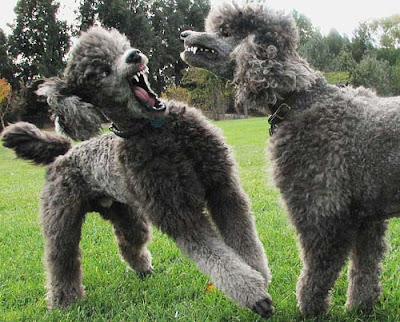
How to Stop Dog Fighting Attack or Aggression

Having problem in controlling your dogs even if you are around them? this is some tips on How to Stop Dog Fighting, Attack or Aggression


A very important rule to stop dog fighting is DO NOT jump into stopping them right away. Because the dog might accidentally bite you!

When your dog is fighting with another dog, he will lose his mind and he will not remember that you are his owner. There are many cases have been reported that the dog has bitten his owner during a dog fight and the owner has had serious injury.


So, it is a bad idea to jump in the middle of the dog fight.
How to Stop Dog Fighting, Attack or Aggression

How to Stop Dog Fighting, Attack or Aggression
Here are some methods that are able to stop dog fighting:

  • If you dog has done well in dog obedience training, shout the command that you train him to come to you. Examples of command are: "back off", "come", "cut it out" and etc.
How to Stop Dog Fighting, Attack or Aggression
  • Some dogs are scared of water, so, pour cold water from any sources that you can find around you during the dog fight. It is even more effective is to stop dog fighting if you are blasting the water from hose.
How to Stop Dog Fighting, Attack or Aggression
  • There are sprays available in the market that is designed to stop dog fighting. This sprays are not physically harmful for dogs, they have a strong odor that make the dogs could stand with the smell.
How to Stop Dog Fighting, Attack or Aggression
  • You also make use a stick or cane that you find around you and hit the ground near the dog fight which could make a sound that scares the dogs away.
    How to Stop Dog Fighting, Attack or Aggression
  • If you happen to own fire crackers, lit them during the dog fight is also an effective way to scare the dogs away. The sound of the fire crackers resembles sound of gun shot that is big enough to scare the dogs.


As soon as the dogs are separated, make sure that they are away from each other to prevent the second dog fight.


Hopefully the above tips on How to Stop Dog Fighting, Attack or Aggression could help even just a little.
Read More..

Dog Breeding DIY or a Real Profession

As many of you know, this dog lover and certified professional dog trainer is a huge supporter of all things animal rescue. However, I know that many folks, even some of my great inquisitive canine students prefer purebred dogs and would rather buy their four-legged friend from a breeder rather than adopt from a rescue or shelter. Check out the photo - there are mutts, mixed breeds from shelters, from private rescues, and top dollar dogs from breeders....can you tell the difference? I didnt think so...unless you know them personally.

Well, I say thats fine, as the choice is yours, but please make sure the breeder is reputable, professional, respects the profession and has clear-cut meaningful intentions for their contributing to the increased pet population. I came across a disturbing story in the local Ventura County Star newspaper about a local breeding kennel here in Ventura County. The allegations included they had over 100 animals and were using aversive training techniques. This is quite upsetting as it seems these folks do not have the animals welfare as top priority. 

The American Kennel Club has posted some guidelines on their website about choosing a breeder. As a professional certified dog trainer, who works with all sorts of dogs from all sorts of backgrounds, the following are some of the highlights Id like to touch on, based on what I think are important when forming this dog-human relationship. 

Responsible Dog Breeders
  • Make the dogs welfare their top priority. 
  • Produce healthy, well-socialized puppies.
  • Consider physical health and the mental well-being of the animal.
  • Are aware of overall health issues, temperament and genetic screening. 
  • Examine the home of which the puppy will be placed. 
  • ABide by the federal Animal Welfare Act, including state and local regulations.
As a human, I would be allowed to carry another persons child for monetary compensation. But wait, Id have to do this legally, otherwise Id be in big trouble. (Dont worry, I have no intention of doing this - I just wanted to use it as an example). There is paperwork, fees, money changing hands etc...and not everyone is allowed to do this, right? And who knows what the child would turn out like? Im a nice person but Im certainly not perfect, and who knows what kind of DNA misfiring could occur. 

So why is it okay for anyone to breed a dogs and sell them! Is it because dogs are "owned"? Is it because the government is too busy running this country into a deeper deficit to care? Purebred dogs certainly end up in shelters - but does the attitude then change? Would someone wanting to purchase a purebred dog feel comfortable "buying" one from a shelter or rescue group? 

Allow me to bring up one other topic of breeding. The AKC mentions they want breeders to breed to preserve the breeds characteristics. This to me is a slippery slope. Why? Because our domestic dogs were initially bred for behaviors that many humans now complain about - including watchdog behaviors (barking, fear and aggression towards strangers), hunting (including the "grab-shake-kill" sequence of predatory behavior), water dogs (cant keep em out of bodies of water including the pool), retrievers (put everything they can find in their mouths)...and the list goes on. 

So what SHOULD we be breeding for? Well, I look at the human-canine relationship as more of an emotional relationship - similar to how we choose our friends and mates. Meaning, if I were to play "mutt-matchmaker" I would set someone up with a dog that fit his or her personality, versus looks or nondescript subjective breed characteristics. I love helping people find their true canine match. As a matter of fact I offer a complimentary monthly public talk on "Before and After You Adopt". The "before" part is helping folks decided on which animal is best for them. The next session at the inquisitive canine studio is August 23, 2009.

Dogs are animals. They are individuals. They each have their own personality, likes, dislikes etc... Ive said this many times, including this post on dog breed discrimination. Isnt time we ask that the breeder profession be taken more seriously? I would think those that follow the rules would prefer there be more rules, including laws and regulation of the instituted laws. 

If Im not legally allowed to manufacture and sell anything I want, then why are humans allowed to breed animals and sell them whenever, wherever, and to whomever they want? 
Read More..

How To Deal With A Nipping or Mouthing Problem

In dealing with the problem of a nipping or mouthing dog/puppy, it is important to remember that it is a dog’s natural behaviour to nip. Hence it is unrealistic to expect such behaviour will be corrected within a few training sessions or totally eliminated overnight. However with consistency, patient and practice, such behaviour can be corrected over time.

Ways to curb nipping behaviour in a dog/puppy:

Avoid rough games such as play-slapping, wrestling, tug-of-war, etc
Avoid vigorous petting, especially around the face. Always pet the dog gently and keeps the hand slow.
Avoid playing with the dog using your hands as he may treat your hands as his toys. Keep several toys and treats at hand for the dog to focus on.
Give plenty of exercise, such as fetching games, hide-and-seek, etc to burn off the energy in him; especially before any petting or interaction as a tired dog or puppy is not likely to nip.
What to do when your dog/puppy nips you:

Method 1

Freeze immediately.

After freezing, say ‘Off’ or ‘No’ in a sharp tone but not to yell or shout.
At this time, the dog will take his mouth away, back away and/or look at you. At this point, praise him gently and calmly.
If he resumes his nipping, walk away from him.
After several minutes have passed, approach and resume the activity with him as long as he does NOT nip again.
Remember: Never allow or continue any activity with a nipping dog/puppy no matter how small he is or whether the bite hurts.

Method 2

This method can be used when the dog does not stop his nipping when you freeze:

Spray an ‘anti-chewing’ spray in the dog’s mouth once. The spray has a bitter taste and the dog will normally dislike such taste.
Spray it on your hands, feet and clothes before interacting with the dog.
Method 3

Put the dog on a leash (use a chain-link leash if he tends to bite the leash) or head collar before interacting with him.
Say ‘No’ when he nips and gently tug the leash.
Hold the dog’s head away from your body until the dog calms down.
Slowly put our hands or feet back toward the dog’s mouth. NO fast movement.
Praise him gently when he only sniffs or nuzzles as this is appropriate greeting gestures of a dog.


And remember to praise your dog abundantly when he does the right thing!


You Can Do It!
To yout dog training success
Read More..

How to Stop Dog from Jumping Up on People Furnitures or Anything

Not that we dont believe on our dogs but sometimes they need to be taught a lesson or two, this is How to Stop Dog from Jumping Up on People, Furnitures or anything


You should apply different techniques to stop dog from jumping based on different situations.


Some people think that it is normal for dog to jump, but, they are getting annoyed after the dog has jumped too much. So, if you are seeking help to stop the excessive jumping behavior of your dogs or puppies, I will recommend you to understand the physical build of a dog first and also the role of jumping plays as part of their nature life.


If you look at the physical structure of a dog, you should understand that dogs body is primarily designed to run and not to jump. Dogs are not kangaroos, they only jump in some special situations. They will jump on other dogs to show that he is the dominance one and take the role of the pack leader. When they are facing dangerous situations, they will sprint and jump to a safer place. Or, they will jump to get food above their body level or use the jump ability during hunting. Other than these few situation, you will rarely see them jumping.

How to Stop Dog from Jumping Up on People, Furnitures or Anything
But nowadays, most of the dogs are kept as family pets. So, their ability of jumping should be greatly reduced. But, some dog owners unintentionally encourage the jumping behavior of their dogs. This has created some inconveniences to the family members. Please see below for more information on situations and reasons for the dog to jump.


The possible situations are:

  • Jumping on People or other animals
  • Jumping on Furniture
  • Jumping over Fence

A few possible reasons that make a dog to jump are:

  • To show dominance over people
  • To seek attention from people
  • To show excitement
  • To show possessive of certain areas

Below are some suggested tips and techniques to stop dog from jumping excessively in each of the 3 situations.


How to Stop Dog from Jumping Up on People, Furnitures or Anything
Photo shows a dog is jumping on a child. The action has the potential to hurt the child.


How to Stop Dog from Jumping on People
When a dog is jumping over people, it could due to excitement, seeking attention or showing dominance. Neither of these 3 reasons is healthy. Like the photo above, the dog is jumping on a child could mean "showing excitement plus with dominance".


How to Stop Dog from Jumping Up on People, Furnitures or AnythingHere is how you can stop your dog from jumping on people:

  • Recognize the pattern of his jumping. Is he jumping to show excitement? Seeking for Attention? or Showing Dominance?
  • If he is jumping because of showing excitement or seeking for attention, you MUST completely ignore him and turn your body away. Never give him any eye contact.
  • If he is sitting calmly for about 30 seconds, then you may give him treats and praise him for being a good boy.
  • This action will trigger a positive reinforcement in his mind: "If I am sitting quietly, I will be given treats and praises; if I jump then I will be ignored. So, I better sit quietly next time to get attention and treat."
  • If your dog is jumping because want to show dominance, you should give him a stern warning and serious facial expression once he tried to jump on you.
  • If your dominant dog continues to jump on you, you should put him on leash with choke collar. And snap the collar every time he tries to dominating over you.

How to Stop Dog from Jumping on Furniture
How to Stop Dog from Jumping Up on People, Furnitures or AnythingMany dog owners allow their dogs to be up on furniture. This happens because the dog owners give the dogs too much freedom and affection. Affection and freedom is good, but too much of them can be bad for your dogs. This has encouraged the dog to develop dominance behavior and also possessive over the furniture. So, some dogs think that they own the furniture and will not allow anyone to come near to the furniture. They also jump on the furniture whenever they want to.


How to Stop Dog from Jumping Up on People, Furnitures or AnythingYou need to be careful in deciding whether you allow your dog to climb/sleep on furniture or otherwise. If you allow him to be on furniture, please be prepared to train him so he will not develop dog behavior problems. The house and the furniture is owned by you, not your dog. You should take the role of the pack leader and invite him on the furniture ONLY WHEN he is a good boy. Your dog should also get down from the furniture whenever you ask him to.


If you dog has developed the jumping on furniture issue, you can do the following to fix the behavior:

  • Use Bitter Apple Spray on the furniture legs; this will create a smell that your dog will avoid.
  • If you do not want to make your furniture smells bad, you must OWN the furniture. You should learn to invite your dog to come on the furniture rather then give him freedom to access as he wishes.
  • First of all, clean up the furniture to eliminate your dogs smell. So, that your dog will think that it is new furniture. Whenever he shows the sign of jump/ climb on the furniture, give him a stern warning with serious facial expression. If he ignores you and continues the action, you should put him on leash and choke collar. You may snap the leash whenever he tries to climb without your permission.
  • Try to make him in the sitting position before you allows him to climb on furniture, this will train his patience. Train him with a command like "allow" to allow him on the furniture.
How to Stop Dog from Jumping Up on People, Furnitures or Anything
Picture shows a puppy which is jumping with excitement. The action is not healthy which might trigger other dog behavior problems in future.


How to Stop Dog from Jumping over Fence
If you are living in a landed house and if you do not train your dog well enough, the chances are your dog would jump over the garden fence. This action is totally not allowed as your dog might hurt himself one day.
How to Stop Dog from Jumping Up on People, Furnitures or Anything

Here are a few suggestions that you can do to help your dog:
Build a higher fence that your dog will not reach


DO NOT give him the freedom to run around your garden, put him on leash and collar every time when you are busy. Release him ONLY when you have time to watch him.


During the time he is free to run around your garden, whenever he shows initial sign of jumping over the fence, give him a warning right away. If he calm down and submit to you, give him praise and food treat.


I believe some professional dog trainers might recommend you to use electric collar. Personally, I think it isnt necessary. electric collar is not easy to be use and if you do it wrongly, it might have adverse effect on your dog.


So thats How you Stop Dog from Jumping Up on People, Furnitures or anything, hopefully that could help any dog lover on solving their dog jumping issues ^_^
Read More..

Dog Healthcare Puppy or Dog Vomiting What We Need to Know and Do

Taking care of a dog or any particular pet is not an easy task, all pet lover knows that, this time well find out How to take care of Dog or Puppy Vomiting: What we need to Know and Do.


Any owner of a dog has to deal with all kinds of problems and issues with their lovable pet, and puppy vomiting is certainly one of them.


When your pet has some dog vomiting, it can be hard to figure out what to do. Of course your puppy cant just walk over and describe whats the matter and what they need to be better. Therefore, you have to use your best judgment and understand what to look out for and what kinds of steps to take in order to help fix the situation.

Puppy or Dog Vomiting, What We Need to Know and DoOne of the first things you have to do with puppy vomiting is try to find direct causes for it. If you puppy vomited white foam or yellow bile, this would mean that the puppy ate something that he wasnt supposed to. This could include types of foods which dont sit well with dogs or it could be completely inedible objects (undigested food) that they picked up off the floor or elsewhere. Whatever it is, if you can track it to something you may be able to quickly understand that this case of dog vomiting was just a one-time scenario and your dog will be fine immediately after.
Puppy or Dog Vomiting, What We Need to Know and Do
Of course, lots of dog vomiting is caused when your puppy eats one of those inedible objects and then gets something stuck in their throat as a result. This is when youre likely to hear a lot of that retching sound as your dog tries to rid the obstruction from its body. As long as the dog can clear this out you wont have a problem. But if it continues or is physically affecting the dog and it seems like he is having difficulty breathing or moving around then you also need to seek out the vet immediately.


Puppy or Dog Vomiting, What We Need to Know and DoSwitches in foods and diet can also be a cause of puppy vomiting. The stomach of all dogs, and of puppies especially, is very particular. They get used to certain kinds of food, in certain amounts. Eating substantially more or switching to different foods can cause a problem with their digestive system. In this case, you may want to avoid giving your dog food for just a short while, giving their bodies a chance to clear out a bit. Then a bland meal consisting of foods like boiled white rice and maybe a small bit of plain chicken will help them get back on track.


Puppy or Dog Vomiting, What We Need to Know and DoPuppy vomiting can also be a sign of a more serious illness or infection of some kind. So how are you supposed to know if its just something thats passing from a change in diet or something wrong that was eaten, or if your dog is really sick? Well, one way to check is to see if its prolonged. If the dog vomiting continues for several days then it would clearly seem that there is more to the situation, and you will need to seek out a vet for some assistance.


Puppy or Dog Vomiting, What We Need to Know and DoAlso important is that if your dog is dealing with some kind of illness or infection then the puppy vomiting will only be one symptom and there could be many others. Other symptoms could include diarrhea in your dogs, fatigue and lethargy, irritations or dog hot spots on their body and so forth. In this case its definitely time to seek out the vet and to see what they recommend for treatment.


Puppy or Dog Vomiting, What We Need to Know and Do

Puppy or Dog Vomiting, What We Need to Know and DoA veterinarian has many different tools and medications at his disposal that he may choose to use for your sick dog. One of these is the medication Flagyl, used to combat bacteria and parasites that could produce vomiting. To induce vomiting, the vet may use something like Apomorphine, a medication thats dispensed via an eye dropper. Alternatively, your vet may seek out actions such as an IV of fluids to combat a lot of harmful vomiting, or may want to take x-ray pictures to see whats going on and if theres anything else involved.


Puppy or Dog Vomiting, What We Need to Know and DoHopefully by now you have a bit of a clearer picture on puppy vomiting. Many different things can be its cause, and there are many different ways that you can try to combat dog vomiting. The most important thing of course is to just be watchful of your pooch, to try to understand the situation as best as possible for yourself and to always seek out assistance for anything drastic or prolonged.


Just to remind you pet lover or dog in particular, especially beginners not to just having dogs for its happy times, but abandoning them when theyre sick or anything, just try and learn things like How to take care of Dog or Puppy Vomiting: What we need to Know and Do, or any other useful tips about dog or puppy, Happy pet caring ^_^
Read More..

How To Train Your Chihuahua or Chiwawa Dog Breed

How To Train Your Chihuahua or Chiwawa Dog Breed
Although they are small, Chihuahua dogs intelligence and braveness should not be underestimated. Besides that, their big shinning dark eyes and large erect ears have captured the hearts of many dog owners. These characteristics of Chi dogs are believed to be inherited from their ancestor - Fennec Fox.


These foxy looking dogs are popular companion dogs with alert and terrier-like qualities.


How To Train Your Chihuahua or Chiwawa Dog Breed
Chihuahuas are good family dogs but not great with children. These small dogs are also very protective of family, so, strangers are advised to keep a distance away from these dogs. The best thing about Chiwawas is they are city dogs which require less exercise compare to other dog breeds. So, you are expecting your Chi dog to be comfortable easily with living in an apartment or a condominium.


In general, Smooth-coated Chi dogs have short and straight hair while Long-coated Chi dogs have long and wave-like hair.


How To Train Your Chihuahua or Chiwawa Dog BreedSome books suggests that long-coated Chihuahuas are product from the crossing between smooth-coated and Papillon dog breed or Yorkshire Terrier dog breed. Thus, some long-coated Chi dogs show very obvious butterfly-like ears (Papillon).


Like any other dog breeds, Chihuahua needs to learn how to behave. You should learn how to train a Chihuahua by house training your chihuahua puppy and also puppy obedience training.


Chihuahua and Human
How To Train Your Chihuahua or Chiwawa Dog BreedChihuahua is the smallest of all the dog breeds in the world. It is named after the state of Chihuahua in Mexico and is very popular breed, particularly in America.


These small dogs were first recognized by the American Kennel Club in 1904. They are also called by people with the name Chiwawas and Chi Dogs.


History and Origins
The History of Chiwawa is very hard to trace, but there is sufficient evidence to prove that it is originating from Pre-Columbian Mexico.


How To Train Your Chihuahua or Chiwawa Dog BreedThe most common theory is that Chiwawas are descended from the Techichi, a companion dog favored by the Toltecs and that the modern dog developed through breeding with miniaturized Chinese dogs brought to the Americas by the Spanish Conquistadors.


Compare with their ancestors, present day Chi Dogs are much smaller. Genetic tests have placed Chiwawas originating in the 1800s.


Group
If you are going to enter your dog for the dog show competition, it is especially important to know what group your dog belongs to in the Kennel Club of your country.


Chi Dog Breed is recognized as Toy Group under both American Kennel Club (AKC) and The Kennel Club (UK).


If you are like me, just want to have a good time with your dog, this information is not so important for you.


Living Condition
In general, Chihuahua does not like cold weather. So, put on a sweater on your dog during a chill weather. Since they are the smallest dogs in the world, they are suitable to live in an apartment or a condominium.


Exercise
Before you learn how to train a Chihuahua, it is important to know that Chihuahua training should come together with exercise. Chis body is tiny, but it still needs to exercise.


How To Train Your Chihuahua or Chiwawa Dog BreedI suggest exercising with you dog for 45 minutes daily. The lack of exercise might turn him becoming a frustrated dog which will release his energy into biting, barking and other dog behavior problems.


Remember that all dogs are NOT meant to be confined in a location. Even if you have a big backyard, your dog still needs to go out and explores the outside world.


Shedding
All dogs shed. Smooth-coated Chi dogs shed more frequently than long-coated. Long-coated Chi dogs shed seasonally, about twice yearly.


Chihuahua Physical Appearance, Characteristics, Temperaments and Average Life Span Information


General Appearance
The two basic body types of purebred these small dogs are Apple headed or Deer headed.


Apple-headed Chi Dogs have short noses, an apple shaped head, and close-set eyes, while Deer-headed Chi Dogs have an elongated nose that resembles Doberman Pinschers. They both have the same chance of being teacup or miniature.


How To Train Your Chihuahua or Chiwawa Dog BreedAn in depth comparison about these two body types of Chihuahua will be discussed below this page. With the information, you are able to recognize instantly the advantages and disadvantages of that particular Chi Dog.


Nose
Color can be in Black, Pink or Chocolate.


Coat and Color
Chiwawa basically has only 2 varieties as shown on the pictures below:-


A detailed comparison is done below this page; you may use the information to help you make the right choice.


a) Long-coated (long-haired)          


b) Smooth-coated (short-haired).


How To Train Your Chihuahua or Chiwawa Dog BreedSize
Height: 6.0 - 10.0 inches (15.0 - 25.0 cm)


Weight: 3.3 - 6.6 pounds (1.5 - 3.0 kg)


Average Life Span
10 - 15 years


Average Litter Size
1 - 4 puppies


Characteristics/Temperaments and Energy level
As per AKC definition, Chihuahuas are graceful, alert and swift-moving with a saucy expression. They are projecting the terrier-like attitudes of self importance, confidence, and self-reliance.


Chiwawa is one of the highest energy levels of any purebred dog. This is the reason why some owners always has problem on how to train a Chihuahua. The secret is Chihuahua training should come together with exercise.


Chi dogs like to give affection to their owners and also acts friendly to other pets. Long-coated Chi tend to be a little reserved and cautious when meeting with strangers for the first time.


Chihuahua Training Information and Tips
How To Train Your Chihuahua or Chiwawa Dog BreedThe Chi dog is a special breed of dog that always wants to get your attention and will try his best to make you happy. But to make him a well-balanced dog, you need to teach him how to behave with puppy training.


The first sixteen weeks of your Chihuahuas life is crucial. Chi is a long life span dog that could live until eighteen years old. So, what you do in the beginning can shape them into either a well behaved companion or a dominant little dog.


Dogs are creatures that live in packs and every pack has a pack leader. It is a MUST for you to learn how to train a Chihuahua and recognize you as the pack leader. If you do not, your Chi will take the role as the pack leader and he will be in charge of the house.


You can begin with potty training, and encourage the behavior with treats. Remember that you should reward only when an order is obeyed. Once your Chihuahua potty training goal has been reached, move on to the next which is crate training. Crate training is important in establishing their territory and when praised and rewarded, your dog will look forward to learning a new lesson.


Thats How To Train Your Chihuahua or Chiwawa Dog Breed, hopefully it could help you chihuahua dog lovers out there, even just a little bit. ^_^
Read More..

Puppy or Doggys New Year Resolutions

Not only us people who can celebrate new years and have a new year resolution each time, but puppy or doggy are also qualified to have a new year resolutions too you know?

With cooler temperatures outside, no huge events on the horizon, and not much else to do to fight the winter doldrums, this is a nice time of year to focus on training your dog. Whether a brand spanking new pet who joined your relatives, an elderly pet who has a few naughty habits, or a pet who has been downright driving you crazy, making a brand spanking new years resolution to train your dog can be that leads to years of enjoying your pet more.

With holiday festivities coming to a close and a brand spanking new year beginning, this is a common time of year to set new goals and resolve to accomplish them.

With the average life span of a dog being about 15 years, it is no doubt a wise investment of your time to prevent or alleviate behavior issues, whether you have a tiny puppy or a dog who is more advanced in years.
puppy dog training new year resolutions

puppy dog training new year resolutionsThose with puppies will likely need to focus on house training, socialization and chewing as well as basic obedience and manners. By taking steps now to prevent issues before they start, you are much more likely to enjoy your dog over the plenty of coming years.

Theres plenty of resources available right in your own community, ranging from individual in-home training, to group classes, socialization opportunities and educational seminars. Whether you work with a trainer or by yourself, training your dog is definite to lead to a well-behaved pet that is a pleasant addition to your relatives.
puppy dog training new year resolutions
In case you have an older puppy or an adult dog with ongoing behavior issues, there is no better time than the present to work on assuaging the issues. Whether by yourself or with a trainer, a tiny work together with your dog now will pay off in years of enjoying your pet and not having to worry about repurcussions that could be caused by definite behavioral issues.
puppy dog training new year resolutions

Whether a puppy or an adult dog, a brand spanking new pet or elderly, having a new year resolution for them that the fact the new year can be a nice time to make a fresh start and get things heading in the right direction. Happy New Year!
Read More..

The 3 Month Old Stage Puppy or Barracuda

The past year or so has been a busy one, and I ended up ignoring my blog... which is really too bad because a lot of things happened in that time. Ill go over it all in another post, but just so I can get to the subject matter, Ill mention a few things quickly. In August, 2014, I lost my beloved black Lab, Berkeley. In September of last year, we adopted a new puppy, a Golden Retriever mix my daughter named Piper. Although I was used to training puppies, I hadnt had one myself in quite some time. Raising a young dog over the past year has helped me become both a better dog owner and a better dog trainer. And with so many people contacting me with young puppies, I thought it was important to devote a blog specifically to the 3 month old puppy stage. Why? Because puppies bite. A lot. And at this age, it can be difficult to know what to do about it.

Training your puppy should not start after he gets his first set of shots nor any time after that. Training  should start the first day you take him home. Getting him used to a crate and used to his routine will make a big difference in how he behaves as a teenage and an adult. Since theres so much I could say about puppy training, though, Ill focus on the stage approximately between 8 weeks and 16 weeks old.


If you own a puppy, perhaps the above picture looks familiar. You try to pet your puppy and he tries to bite the crap out of you. He bites your ankles, your feet, your hands... and really anything he can get his mouth on. If you tell him "No," sometimes he might stare at you with a devilish look and lunge at you, even at your face. Is this something to worry about? Do you have an aggressive dog on your hands? Chances are that you dont. What you have is a puppy testing his limits, treating you like another puppy and "trying" out his dominancy skills.

Ive had almost all breeds act this way, although the pressure of their bite can vary. You might be tempted to run away, put the dog in his crate or put the dog outside. But you are just avoiding a situation that could really be used as a learning tool for your new little beast. So be prepared for a few puppy bites (yes, those razor sharp teeth HURT!) but if you practice with your puppy, teaching him what behavior you like versus the behavior you dont like, it will click... eventually... I promise.

If you are a parent, you might remember those days when you didnt have a lot of control over your toddler. Maybe your child would reach for something she shouldnt have or something dangerous, and you would redirect her to an acceptable item. (No, no, dont put that pen in your mouth... heres your toy!) Its the same thing for your puppy. If you sit on the floor with your puppy and a couple of toys (not hundreds... lets make the puppy excited about the toys, not bored because there are too many), try giving the toy to your puppy. If hes chewing on the toy, tell him with a positive tone, "Good dog" or "Yes." If he mistakes your fingers for a toy or chomps down on you instead, make a startling noise ("Eh! Eh!"). In most cases, the puppy will release. Then replace your hand with the acceptable toy.


Here I am with a chocolate Lab puppy, Dakota, teaching him that its okay to bite the toy, but not okay to bite me.

The one thing to keep in mind is that before 4-5 months old, a puppy doesnt care that much about verbal praise or even that much about petting as a reward. A tired puppy might like to snuggle or be pet, but if your puppy is full of energy, chances are that he prefers to bite than to be pet. Pick your battles. Dont force him to accept cuddles if hes feeling rambunctious. Likewise, if you dont have time to work with him when his energy level is high, give him something to occupy his attention (kong with frozen peanut butter in it, a bone filled with treats, an interactive toy). Sometimes you may need to put him away in his crate or behind a baby gate. Work with your puppy if you are able, but its okay if you sometimes dont have the time. Just be prepared to choose another time to play with your puppy and teach him what is acceptable to chew on. There were definitely days when I told my kids not to interact with Piper because she was in "Hyper Piper" mode. Instead of making my kids afraid of their puppy, I told them to come back and play with her once shed settled down.

There is so much more I could say about puppy training, but youll just have to hire me to find out. :-) Meanwhile, if you have a young puppy that is biting you, acting more like a shark than a puppy, dont worry too much. It is definitely a stage young puppies need to go through... and there is a light at the end of the tunnel.

Read More..

Dog Play Behavior Are they fighting or playing

"What is dog play all about?" This is one of those comments I hear from various folks...and often get questions about. Both in and out of the studio classroom - especially when folks first start bringing their dogs to our dog socials at my studio - The Inquisitive Canine here in Ventura.
Humans commonly assume that dogs that "hump" or "mount" just want to have sex with them, or that the dog is attracted to them etc... Ugh... really? Do you really think youre that charming, and that maybe all of the spoiling has lead your dog to want to return the favor in a way they think you might like? Come on... heres a quickie lesson on dogs humping and dog play:


Dog play is practicing of "the four Fs" - meaning, if they had to survive out in the wild so they could pass on their genes - surviving, hunting for food, creating more of themselves in order to pass on their genetics (cause thats what its all about, right) - survival of the fittest so you can pass along your DNA... This is the list of the four Fs:
  • "Fight" - dog play can get really rough - think two young human male children playing and wrestling about - With dogs its: I mouth you (practice biting but inhibited bites in play), you mouth me, I pin you, you pin me etc...
  • "Flight" - I chase you, you chase me
  • "Feed" - meaning all the steps of the predatory sequence, including the "grab-shake-kill" - chasing, stalking etc...
  • "Fun!" (fornicating etc...) - I mount you, you mount me... Unless both dogs (one male one female) are actually intending to breed in order to make more of themselves, then the whole humping action is just play! Thats why you see males humping males, females humping females, females on males, dogs on humans etc...and humping in positions that are not related at all to actually "doing the deed"...
Its important that dogs learn what proper dog socialization play is, and what is appropriate - that is what dog social time is for!!! Yes, we can give the dog a "time out" if we dont like something... but dogs (really important for puppies especially) are learning about what play is - and doggy DNA is telling them to "hump" - most likely trying to get the other "animal" to play... If humans dont like it, the best thing to do is completely walk away and ignore the dog completely, but throw a party and play like crazy when he is playing the way they want... Older, well socialized dogs, who have great play skills can help "guide" younger pups...the older one will "tell him" (growl or a snap) to knock it off if he or she has gone 
too far...

*A BIG note of importance: DOG PLAY SHOULD BE: RECIPROCAL and CONSENSUAL! Sure, for some dogs theyd rather be the chasee vs the chaser. How to tell? Look at the one being chased - are they running off and trying to hide the entire time? Cowering under things? Trying to find their guardian? Or are they egging the chaser on? "Come on! Chase me!!" 

As for consensual: look at this picture of Freddie (the one mounting) and Jazz (the one in the red harness). Jazzs face is relaxed, focused on something else at the moment, doesnt appear to care. If it werent consensual, Jazz would have turned around and growled or snapped "Knock it off!!!" 

Providing opportunities for our dogs to socialize and play is very important for their well being, and development as well-mannered canines - dog training classes and dog socials can help provide them. You just want to keep an eye on the situation, making sure that play-time is safe and fun. 
Read More..

Top 10 Weirdest Ways To Remember Your Deceased Dog or Other Pets

Ever wonder how you could take it when the time comes for your beloved dogs? how you could not to forget them, here is the top 10 Weirdest Ways to Remember Your Deceased Dog or Other Pets.

Clone Them
If you just cant give up your beloved pet, you can always try cloning them if you have a DNA sample and $50,000 lying around like Bernann McKinney did when she got five clones of her beloved pit bull created. 

Weirdest Ways To Remember Your Deceased Dog or Other Pets
Of course, the new puppy clone may look just like your old furry friend, but it will not grow up to have the same personality and behavioral traits, so really, arent you better off adopting a new puppy from your local animal shelter?


Hug A Pillow Containing Their Ashes
Weirdest Ways To Remember Your Deceased Dog or Other Pets
If youve ever wanted to give your long gone furry friends a big fat hug, the soft-hearted pillow will let you cuddle up and take a nap with your deceased pet. The Soft-Hearted pillow contains a small plastic pouch that will seal in their ashes tight so you can cuddle them for eternity. You can even personalize your pillow with embroidery or trimmings to further memorialize your critter.


Rock Out With Their Record
Weirdest Ways To Remember Your Deceased Dog or Other Pets
Whether you named your pet after a musician or “How Much Is That Doggie In The Window” makes you think of your beloved critter, sometimes music is one of the best ways to remember your lost loved one. Thats why And Vinyl presses ashes into vinyl records for you to listen to forever after. You can either use your favorite song or have the company write a track specifically for you and your pet. The company will even paint a portrait of your pet using its ashes and include that as the albums cover art.


Make A Necklace From Their Hair
Weirdest Ways To Remember Your Deceased Dog or Other Pets
If your fluffy kitty or puppy left hair all over the house, or if you had a chance to shave off some of their fur before their cremation or burial, you can always try rolling their fur into balls and then turning those balls into jewelry like designer Kate Benjamin.


Wear A Sweater Made From Their Fur
Weirdest Ways To Remember Your Deceased Dog or Other PetsAlternatively, if you want a bigger tribute made from your critters fur then you can always have the hair turned into yarn and then knitted into sweaters like these people who are part of Erwan Fichous Dogwool series. While the models used in Fichous series are given their own jackets made from their dogs fur courtesy of the photographer, youll have to find your own knitter to work with the fur because Fichou will only accept volunteers who are willing to pose in the jackets beside the pets who provided the fur.


Load Bullets With Their Ashes
Weirdest Ways To Remember Your Deceased Dog or Other Pets
Did little Fido love hunting with you? Then why not take him on one more hunt by loading up your shotgun cartridges with his ashes like Joanna Booth did with her husbands ashes? While you can probably find a weapons dealer locally who could help add the ashes to your bullets, Caledonian Cartridge Company in England will most certainly be willing to take on the challenge, being as how they already helped Mrs. Booth with the process.


Form A Diamond With Their Ashes
Weirdest Ways To Remember Your Deceased Dog or Other Pets
Pets only live for a short while, but diamonds are forever, so why not let your past pet live on forever in a stunning piece of jewelry? A Japanese company named Lido can turn your pets ashes into a yellow diamond up to one carat in size, which can then be set into a jewelry piece for you to wear for the rest of your life.


Create Jewelry From Their Nose
Weirdest Ways To Remember Your Deceased Dog or Other Pets
Artist Jackie Kaufman uses a quick-forming silicon mold to take imprints of pets noses, which she then uses to cast metal pendants. While the process is fast enough that it doesnt bother living cats and dogs, it could just as easily be adapted for those who have recently passed away. (Link)


Tattoo Them On Your Arm
Weirdest Ways To Remember Your Deceased Dog or Other Pets
Sure you could tattoo a portrait of your pet on your arm, but if you really want to personalize your tribute tattoo, you could always incorporate some of your furry friends ashes. While there are a lot of tattoo shops willing to mix the ashes in with the ink they use, be sure you ask ahead of time because some shops are unwilling to perform this procedure. 


Immortalize Them As Art
Weirdest Ways To Remember Your Deceased Dog or Other Pets
If you arent up to inking a permanent tribute of your pet onto your skin, then you can always have a more traditional portrait of them painted by artist Wayne DeFrances, who will incorporate your pets ashes into the paint he uses.


Care to try one of those weirdest ways to remember your deceased dogs or other pets? i suggest you better not.
Read More..

Punishment Used for Modifying Human or Dog Behavior Only Useful if Done Correctly and Enforced Consistently if at All!

2010 is in full swing! And with a brand new year that means brand new laws going into effect. Youve probably read about some of the new California laws for 2010: Blueberries, paparazzi and cow tails just to name a few. Sure, all have their place in our legal system, but just like all laws theyre only good if theyre enforced! Otherwise, theyre just empty threats.

Why does this little dog trainer in Ventura bring this subject up? Mainly because:
  1. Punishment is still being used too often as a first-line treatment of dog behavior issues: Fancy, gimmicky, popular techniques have people focus in on undesired behaviors, then use methods that "dominate" and "control" with such maneuvers as pinning, pinching and poking! Ouch!
  2. When it is used, its not being used correctly: Consistency! Timing! The former is usually absent and the latter is usually off.
  3. The more common type of punishment techniques being practiced are less of the humane type and more of the nasty bully type (aka: aversive/coercive): Alpha rolling, pinning, squirting, zapping, and choking which often leads to additional behavioral issues that end up being more difficult to treat than the initial problem behavior!
Okay, first off allow me to clarify once again that just because Im a certified dog trainer who practices positive reinforcement reward-based dog training methods, whose philosophy is in the science camp of dog training, and one who will take the path of least resistance whenever possible, doesnt mean I dont use punishment. I do. However, not as the first step of any training plan. As a matter of fact I dont even bring it up until midway into my dog training classes at Ventura College or my dog training studio. I also use the type of punishment that causes the least amount of nasty side-effects, if any at all.

Whats the basis of my punishment approach if I indeed need to go that route? Simple, reward removal! Similar to sending a basketball player to the bench for one too many fouls, not allowing a dog to participate in an activity (greeting someone or a rousing game of tug) is the punishment.

Theres no reason to head down the "dark path" by kicking, smacking, choking, alpha rolling or "showin him whos boss" in order to get your point across. What do most animals learn when faced with threats and physical harm? How to avoid the punisher! As opposed to which behavior you wanted in the first place. One more reason why punishment should be used as a last resort and with a well thought-out dog training plan!

For additional information on aversive dog training techniques and punishment, please check this dog training tips post from last November.
Read More..

Lots of yummies for this little trick or treater!

Poor Poncho. He is the best ever! How many dogs would allow their nails to be trimmed, then follow it up by being dressed up for Halloween - as a food item no less! Too cute... check it out>>>>

I did make it "fun" for him though. For nail trimming he got leftover rice cake crumbles (he loves em), with mixed in lamb jerky. For the "lobster" outfit he got the same treats, plus some "ball time", which he finds very rewarding. 

See? Just goes to show you 1) you can train a dog to like anything (almost) 2) you can use many things besides food to reward your dogs great behavior! 

Happy and safe Halloween, from me and my sidekick Poncho! AKA: my "rock lobster" 
Read More..